Report di Sintesi del Webinar "DisseminAzione & Impatto"
WEBINAR July 17, 2025
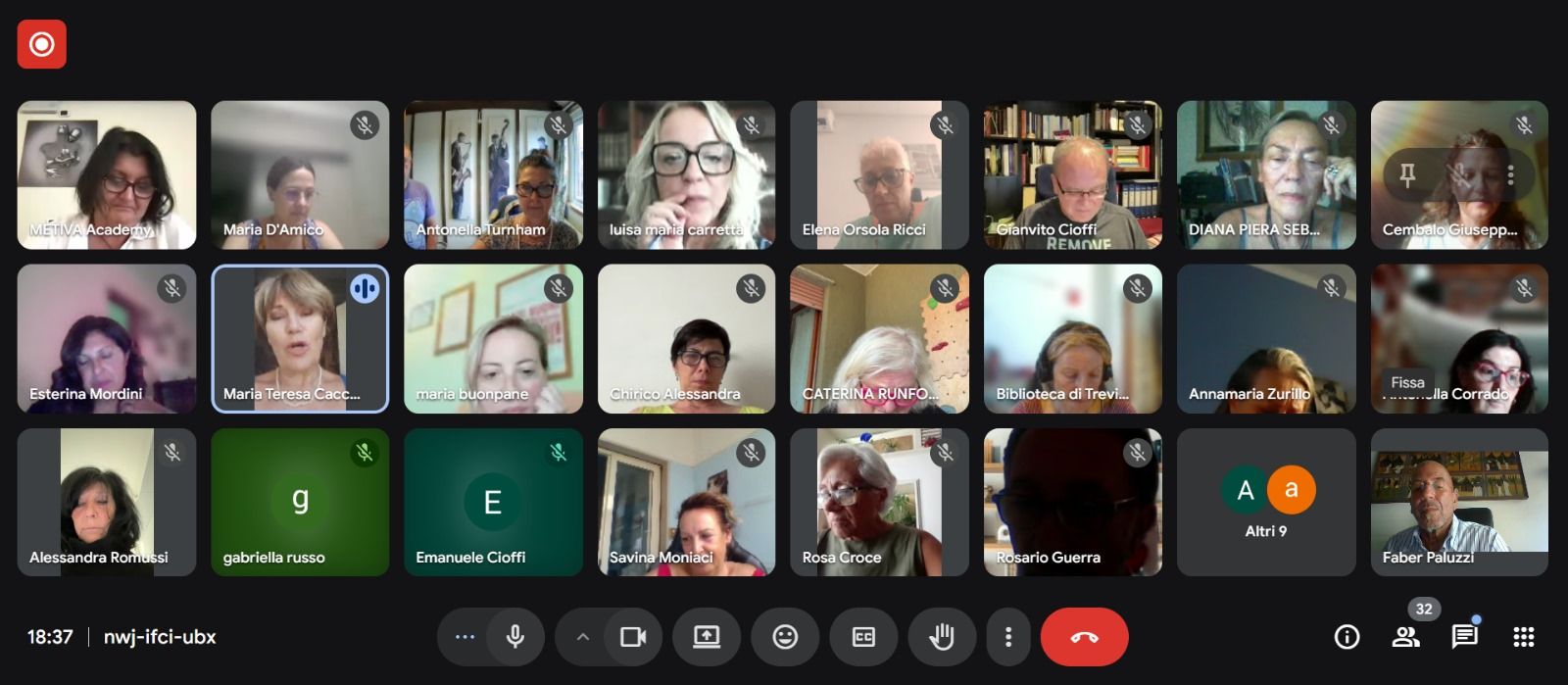
On July 17, 2025, METIVA Academy held a webinar dedicated to disseminating the results of the first year of Erasmus+ KA121-ADU accreditation for adult education. The event was attended by over sixty professionals in the field, representing eighteen public and private organizations, who shared experiences, data, and testimonials. The first part of the meeting illustrated the nature of accreditation mobility as a strategic lever for the professional growth of trainers, educators, and teachers. Job shadowing in Tenerife, training in Prague and Athens, group mobility in Barcelona, and online courses provided insights into innovative methodologies and the transfer of digital, intercultural, and pedagogical skills to the local community. The predefined objectives of internationalization, trainer training, and inclusion translated into tangible results. Sixteen participants reported an average increase of 1.26 points in intercultural competence measured through a pre- and post-survey, and 85 percent of them adopted at least three new methodologies upon their return. Ninety percent have integrated advanced digital tools into their educational practices, demonstrating the replicable and sustainable impact of mobility. A significant portion of the webinar was dedicated to the most relevant case studies, accompanied by the presentation of the digital badges developed as micro-credentials for acquired skills. The badges incorporated aspects such as intercultural competence, digital pedagogy, the use of artificial intelligence tools, and peer learning, serving as motivational and professional recognition tools. The regional hub model was at the heart of the story. Six permanent thematic centers, located in Calabria, Abruzzo, Lombardy, Campania, Puglia, and Lazio, were established as training and field research laboratories. Each hub offers modular specialized training packages, from ESG sustainability coaching to cybersecurity training, cultural workshops, and programs for the promotion of sports. The circular mechanism stipulates that twenty percent of the European funds received by each partner will be reinvested in programs aimed at people with fewer opportunities, ensuring a lasting social impact. Interaction with external partners, representatives of training providers, and institutions confirmed the network's relevance and interest in active participation. Roundtable discussions and a Q&A session offered strategic insights for developing further collaborations and joint projects. In closing, METIVA Academy announced the opening of new calls for the next mobility cycle and invited interested organizations to express their commitment using the dedicated form. The slides and this report are available on the Academy website. The webinar consolidated METIVA Academy's position in the European adult education landscape, demonstrating the value of an integrated approach combining mobility, training, and network governance at the regional level.